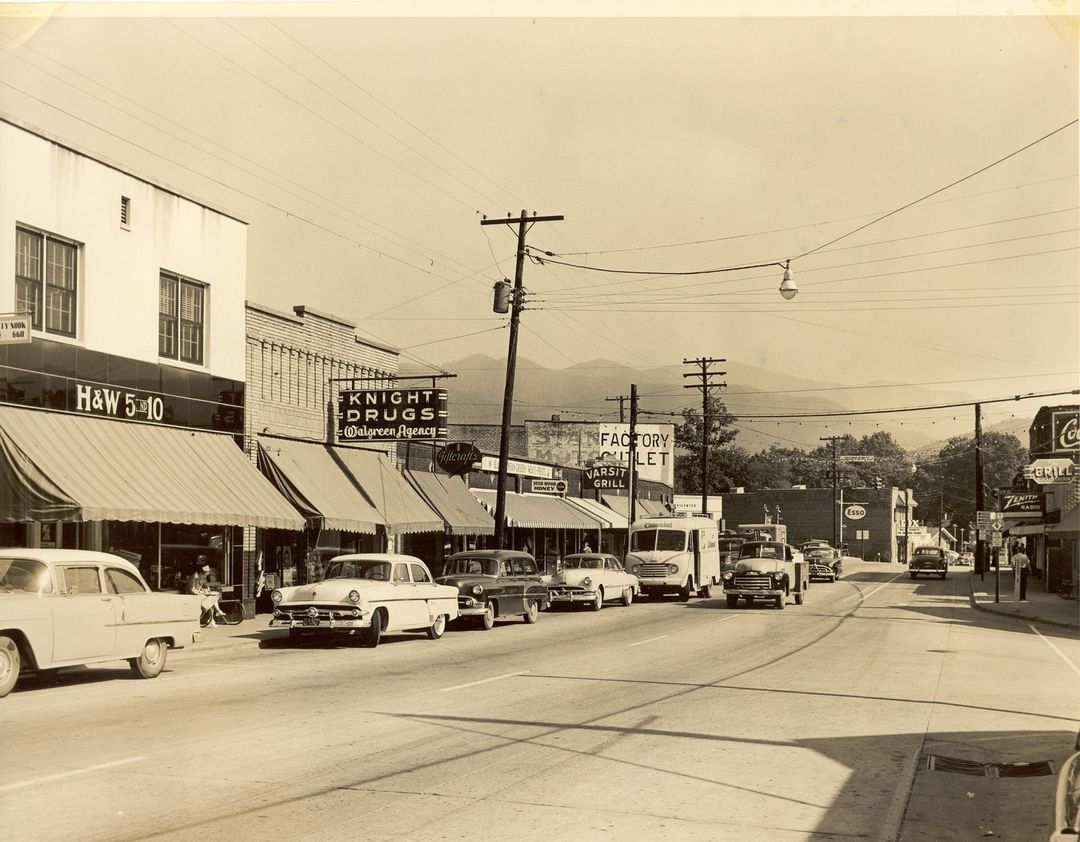
Update on storms early Thursday morning in Black Mountain:
"... tornadoes were confirmed in Western North Carolina from Wednesday's severe weather outbreak ... and an EF 0 tornado in Black Mountain. The Black Mountain tornado had maximum winds of 85 mph, and a path of 2.47 miles. It brought down a communications tower at the Black Mountain Fire Department and uprooted several trees near the Black Mountain Golf Course. "
SOURCE: WLOS TV NEWS
Friends had trees down on the street where I used to live, and I know the big 300 year old tree was down across US 70 on the east side of town. So it apparently was 1/2 to 3/4 mile away from me. Thank goodness.

300 year old White Oak tree down (over power lines) on US 70 Black Mountain 5.9.24 photo by Aja Mooney at 7:15 am.
Nobody was hurt, but at least one home was damaged severely. It is the house that always has the most Christmas lights each year, and the occupants had taken shelter elsewhere.
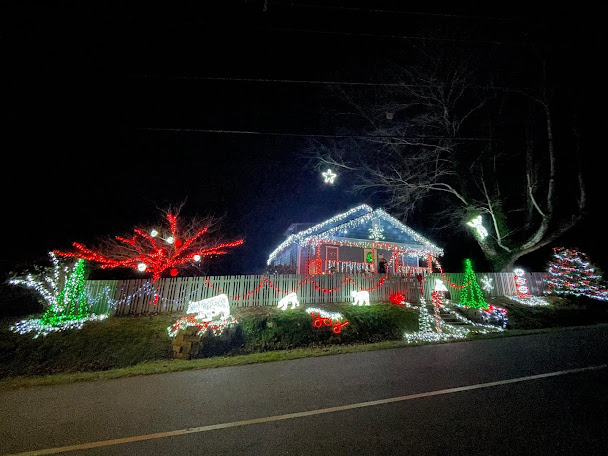

Christmas House after Thursday 5.9.24 tornado EF-0 hit.
Owners Brian and Lisa Jennings posted on Facebook:
We have had many requests to share how our community can support us, so here are a few things that we could use:(1) Most importantly - we will need somewhere to live for the next year or more as we rebuild. We have one dog and one cat and are looking for a pet friendly furnished house to rent in Black Mountain, ideally somewhere close to our neighborhood.(2) We need bins and boxes to pack up our lives for storage and a new rental.(3) While we are fortunate to have homeowners insurance, there are many incidental costs that we know we will incur before the end of this. If folks feel they would like to donate you can find me on Venmo at LisaJenningsBMT. Anything above what we need to get back on our feet will be reinvested into Christmas lights when it’s all said and done.
And so our neighbors need help. I will be doing some of the last part of their request.
This is how so many other neighborhoods have been affected by recent storms.
PS. A map came up on FB at around 8:30 pm tonight. "The May 7 tornado that tracked through Black Mountain"